





00 / THE BEGINNING

YOU WERE TAUGHTHOW TO LIVE.BUT WERE YOUTAUGHT WHY?

A visual journey from conditioning to inquiry — from the fragments of what we think we know toward a clearer examination of ourselves.

BEGIN THE JOURNEY
QUESTION
01SELF-EDUCATION

FIRST,
QUESTION
YOURSELF.

Before changing the world, examine the one who is looking at it. Self-education begins when borrowed answers are no longer enough.

SCROLL TO TRANSFORM
02THE INQUIRY

WHO IS
THE “I”?

After Krishna, the journey turns toward seeing itself: an illuminated eye and mirror become a visual metaphor for observation and the question, who am I?

SCROLL TO TRANSFORM
03FROM SELF TO WORLD

ONE
PLANET.
BILLIONS OF DESIRES.

The eye dissolves. The same particles reorganise into Earth, widening the question from the observer to the world that is being observed.

SCROLL TO TRANSFORM
04NATURE

WHAT DO WE
CALL PROGRESS?

Earth dissolves into living nature. The question now reaches the idea of progress: what are we changing, and what are we losing?

SCROLL TO TRANSFORM
05THE VASTNESS

FROM LIFE
TO THE UNIVERSE.

Nature disperses into the vastness of the universe, expanding the visual field until the final turn brings the journey back to the mind.

SCROLL TO TRANSFORM

THE INQUIRY

DON’T COLLECT
ANSWERS.
LEARN TO SEE.

Self-education is not the accumulation of more information. It is the examination of the person who interprets information.

EXAMINATION 01 / 03

03 / PHILOSOPHY

A FRAMEWORK FOR INQUIRY

WHAT IS
TRUTH?

Not a collection of conclusions, but a question worth returning to: how do belief, desire and identity shape what we call real?

QUESTION THE QUESTION
BORROWED01 / 04

What if certainty is borrowed?

A belief can feel personal simply because it has lived with us for a long time. The first movement of inquiry is to notice where a conclusion came from before treating it as truth.

FROM CERTAINTY → OBSERVATION → CLARITY

Note: This section presents a philosophical framework for inquiry, not a claim that every tradition defines truth in the same way.

04 / SCRIPTURES

READ · QUESTION · CONTINUE

READ.
QUESTION.
SEE.

Texts can become authorities, or they can become invitations to look. This section treats scripture as material for inquiry rather than as a substitute for inquiry.

0101 / 04

THE FIELD OF ACTION

BHAGAVAD GITA

A dialogue placed in the middle of conflict: action, responsibility, attachment, knowledge and the question of how to act without being lost in the results.

What is action when the actor is being examined?

THE TEXT IS NOT THE END OF THE QUESTION

Editorial framing: the descriptions above are concise introductions for a visual website, not substitutes for reading the texts themselves or for the diversity of interpretations surrounding them.

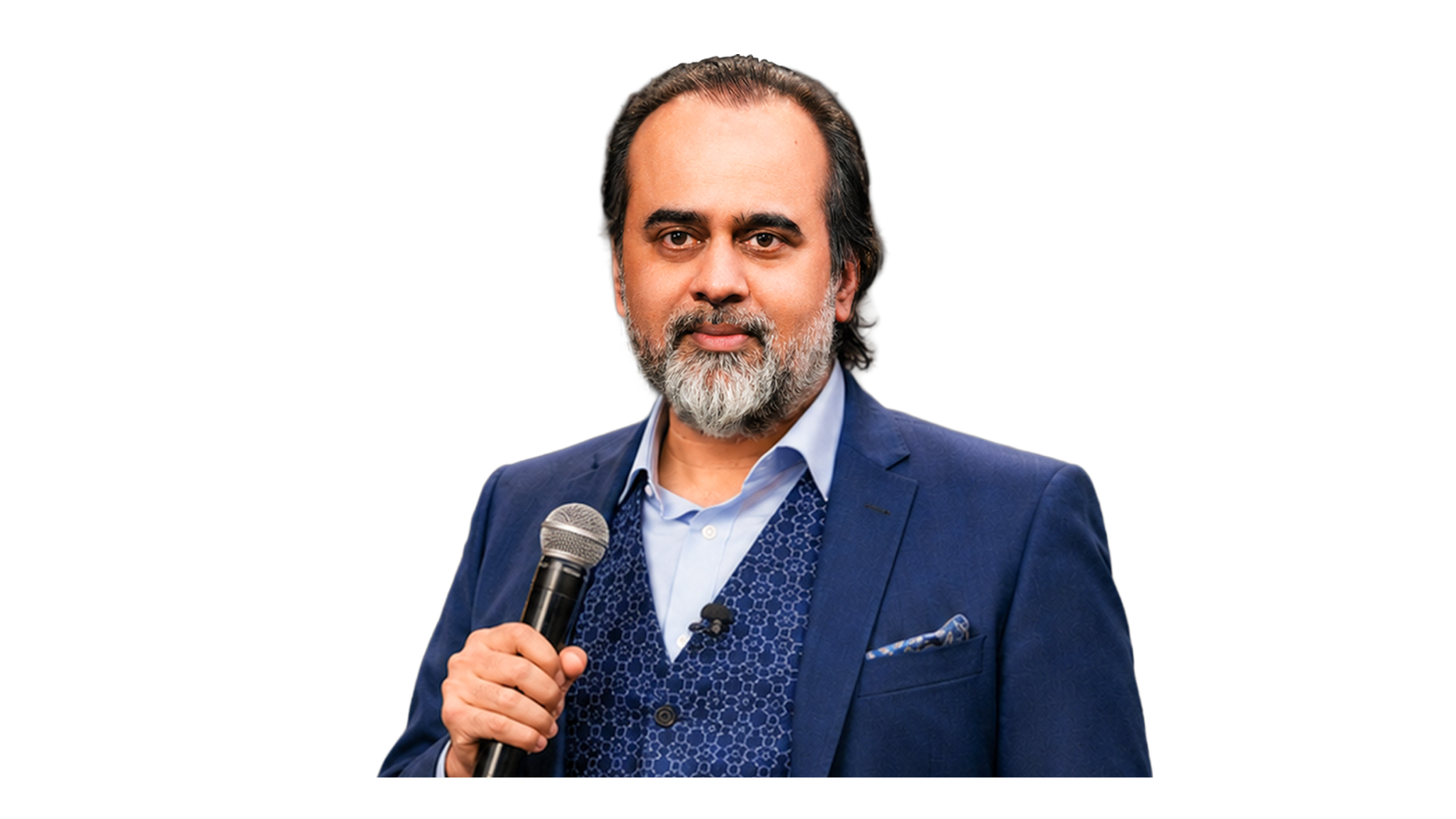
05 / ACHARYA PRASHANT

TEACHING · INQUIRY · TEXT

THE TEACHER
AS MIRROR.

A concise introduction to themes associated with Acharya Prashant’s public teaching. The purpose here is to explain the framework, not to replace the primary sources.

01 / INQUIRY

Question the question.

Acharya Prashant’s public teaching places self-inquiry at the centre: examine the assumptions, desires and identities through which experience is being interpreted.

The direction turns inward before it turns outward.

EXPLORE THE PRIMARY TALKS, BOOKS AND TEXTS FOR FULL CONTEXT.

01 / 03

Framing: this is a neutral editorial summary of themes associated with the public work of Acharya Prashant; individual claims and interpretations should be checked against his original talks and writings.

06 / IMPACT

SELF → SOCIETY → WORLD

INNER CHANGE
MEETS
THE WORLD.

The question does not end with the individual. What we value, consume and build shapes the world around us.

LEARNING01 / 04

What are we actually learning?

Education can transmit information, skills and credentials. A deeper question is whether it also teaches a person to examine assumptions, attention, desire and the way knowledge is being used.

From information → understanding

THE OUTER WORLD REFLECTS INNER CHOICES

Perspective: this section connects self-inquiry with practical domains without claiming that individual awareness alone can solve complex social or environmental problems.

07 / START LEARNING

THE JOURNEY BECOMES YOURS

NOW, BEGIN.

There is no single correct doorway into inquiry. Choose a starting point, slow down, and test what you encounter for yourself.

SELECTED PATH · 01 · START WITH A QUESTION

This gateway is intentionally simple: learning here means examining, reading and observing—not accepting a conclusion because a website presented it.

08 / LIVING PRACTICE

READ → OBSERVE → TEST → RETURN

MAKE THE
QUESTION
LIVING.

A philosophy becomes useful when it can be examined in ordinary moments. These small practices are prompts, not prescriptions.

NOTICE / PRACTICE01 / 04

Catch the first reaction.

When something pleasant or unpleasant happens, pause before explaining it. Notice the immediate movement: attraction, resistance, fear, comparison or justification.

What appeared in you before the story about it?

ONE MINUTE · NO PERFORMANCE · JUST OBSERVATION

00:60

Use the timer only as a simple pause. The point is not to complete an exercise perfectly, but to notice what actually happens when attention is given without immediately reaching for an answer.

09 / RETURN TO THE QUESTION

BEGIN WHERE
THE ANSWER
ENDS.

The journey does not end with a conclusion. It returns to the one who is asking. Choose a question, stay with it, and notice what changes when you do not rush to resolve it.

STAY WITH IT / Select a question to open the inquiry.

NO FINAL ANSWER · NO BORROWED CONCLUSION · KEEP LOOKING

10 / RELIGION · BELIEF · INQUIRY

QUESTION THE FORM / EXAMINE THE MOTIVE

WHAT IF
RELIGION
BEGINS WITH SEEING?

Religious traditions contain many different understandings of faith, ritual, knowledge and liberation. This section presents an inquiry-oriented philosophical lens rather than a definition of religion for everyone.

BELIEF / INQUIRY01 / 04

What do you believe because you were told?

A belief can be inherited before it is examined. Family, culture, community and authority can all shape what feels obvious. Inquiry begins by noticing that history rather than treating familiarity as proof.

Inherited is not the same as understood.

?

NO TRADITION IS REDUCED TO ONE SENTENCE. READ PRIMARY TEXTS. EXAMINE INTERPRETATIONS. KEEP THE QUESTION ALIVE.

The inquiry-oriented framing here is compatible with themes found in several philosophical traditions, but the traditions themselves contain diverse schools, practices and interpretations. The section is intentionally presented as a lens for examination, not as a universal religious conclusion.

11 / KNOWLEDGE

INFORMATION ≠ UNDERSTANDING

DON’T JUST
KNOW MORE.
SEE MORE.

Self-education is not only the expansion of memory. It can also mean examining how knowledge is formed, what assumptions accompany it, and whether it changes the way you perceive.

INFORMATION / LENS01 / 03

How much can you collect without seeing?

Information can increase the number of things you can say without necessarily changing the way you look. More facts can coexist with the same assumptions, reactions and habits.

MORE TO KNOW

FACTS CAN FILL A MIND. INQUIRY EXAMINES THE MIND THAT USES THEM.

This distinction is a philosophical framing, not a claim that information and understanding are separate in practice. Deep understanding generally depends on accurate information; inquiry asks what we do with it.

12 / THE READING ROOM

READ THE TEXT / THEN READ YOUR INTERPRETATION

DON’T COLLECT
QUOTATIONS.
READ DEEPLY.

Texts can become another source of borrowed certainty when they are reduced to slogans. This room treats reading as a slower encounter: source, context, interpretation, question.

BHAGAVAD GITA / READING LENS01 / 04

The field of action

What happens when action is examined instead of merely justified?

The Gita can be approached as a dialogue about action, attachment, knowledge and the nature of the self. Read the text itself and compare interpretations rather than treating a summary as the text.

PRIMARY TEXT → CONTEXT → INTERPRETATION → YOUR OWN EXAMINATION

The descriptions above are intentionally brief orientation notes. They do not attempt to represent the full history, theology or diversity of the traditions named.

DEEP DIVE / QUESTION

DON’T JUST ASK.
EXAMINE.

Choose a question. Separate what is observed from what is interpreted. Then identify what remains open.

01 / 3

What do I actually know?

Separate direct observation, remembered information, interpretation and belief before deciding what follows.

OBSERVATION

What could be independently checked or directly observed?

SOURCE METHOD

Use this panel as a method template. Attach verified sources to individual claims before publishing them as factual conclusions.

OPEN QUESTION

What evidence would make you revise your current view?

THE INQUIRY LAB

Don't just read.
Investigate.

Open a question. Stay with it long enough to examine what you usually take for granted.

THE EVIDENCE OBSERVATORY

Look beneath
the statement.

Move from assertion to examination. Separate what was said, where it came from, the surrounding context, and what remains uncertain.

EXAMPLE 01 / CLAIM

A statement becomes stronger when its evidence can be examined rather than merely repeated.

A useful inquiry does not hide uncertainty. It makes uncertainty visible.

KNOWLEDGE ATLAS / 01

MOVE THROUGH
QUESTIONS.

Ideas are connected. Follow a question outward, then return to the one who is asking it.

01

The one who is looking.

Begin with the observer: attention, identity, desire, fear, and the assumptions that shape perception.

13 / THE MANIFESTO

NO FINAL ANSWERS / ONLY A CLEARER QUESTION

LEAVE WITH
A QUESTION.

A final page should not manufacture certainty. It should leave the visitor with a sharper relationship to observation, knowledge, belief and the self.

CURRENT PRINCIPLE
/QUESTION

QUESTIONDon't inherit the question from the answer.

THE JOURNEY DOES NOT NEED TO END HERE

?

LOOK AGAIN.

14 / THE SYNTHESIS

SEE → QUESTION → CONNECT → RETURN

THE POINT IS NOT
TO ARRIVE.
IT IS TO SEE.

The sections before this one are different doors into the same larger activity: examining experience, ideas, texts and consequences without outsourcing the entire inquiry to someone else.

CONTINUE DOWN / THE SYNTHESIS
FOUR MOVEMENTSA FRAMEWORK FOR CONTINUING
OBSERVATION / MOVEMENT01 / 04

Start with what is happening.

Before naming an experience, notice it. Before defending an opinion, notice the reaction around it. Observation gives the inquiry something more solid than assumption.

What can you directly observe right now?

OBSERVATION

KEEP FOUR THINGS
IN THE ROOM.

SELFWho is experiencing this?

NO LOGIN · NO SCORE · NO CERTIFICATE · JUST A PLACE TO BEGIN LOOKING MORE CAREFULLY.

15 / THE INQUIRY LAB

OBSERVATION / ASSUMPTION / MOTIVE / CONSEQUENCE

DON’T JUST
THINK ABOUT
INQUIRY. TEST IT.

A small interactive laboratory for separating what happened from what was added afterward. There is no score and no correct personality type. The exercise is simply to slow the movement from observation to conclusion.

A BELIEF / CASE01 / 04

Someone gives you an answer before you ask the question.

A confident explanation arrives through family, culture, a teacher, a social feed, or a community. It may be right, wrong, incomplete, or useful in a particular context.

0 / 3 PROMPTS EXAMINED

READY TO CONTINUE?There is nothing to submit. Marking this complete only changes the visual state of this module.

This is an educational reflection tool, not a diagnostic test or a substitute for evidence, professional advice, or careful investigation of complex real-world questions.

16 / THE LEARNING ATLAS

SIX DIRECTIONS.
ONE INQUIRY.

There is no required order for understanding. This map is a way to see how self-observation, thought, texts, society, and action can be examined as connected questions.

THEQUESTION
01SELF01 / 06 EXPLORED

CURRENT DIRECTION

START WITH THE ONE WHO IS LOOKING.

Before collecting more conclusions, examine the observer: reactions, identities, desires, fears, and assumptions.

QUESTION

What do I actually know about the one who is experiencing this?

TRY THIS

Pause before the first conclusion. Notice what appeared before the explanation.

17 / THE WORLD MIRROR

THE WORLD
REFLECTS US.

FROM INNER PATTERN → OUTER CONSEQUENCE

Look at ordinary life as a field of inquiry. Attention, comparison, identity, technology, and choice leave traces beyond the private mind.

01ATTENTIONLOOK CLOSER
THE SIGNALNOTICE THE NEXT DISTRACTION.

CURRENT MIRROR

WHAT ARE YOU GIVING YOUR LIFE TO?

Look at where your attention goes before deciding what matters.

Attention is limited. What repeatedly receives it can shape what feels important, urgent, or real. The exercise here is observation, not self-judgment.

18 / THE QUESTION ARCHIVE

KEEP THE
QUESTION.

NO ANSWER BANK

A collection of questions to return to. Save the ones that stay alive, revisit them, and test them against experience.

00 SAVED
01 / KNOWING

RETURN TO THIS

WHAT DO I ACTUALLY KNOW?

Separate what is directly observed from memory, interpretation, assumption, and repetition. The distinction is simple; keeping it alive is the practice.

FIELD CUE

NAME ONE THING YOU ARE CERTAIN ABOUT. THEN ASK WHY.

01 / 08

19 / THE REFLECTION CHAMBER

LOOK
AGAIN.

A PRACTICE OF SEPARATION

Move from event to reaction, story, motive, assumption, and finally a testable choice. The layers are a tool for examining one situation without rushing toward a verdict.

CHAMBER PROGRESS0%
01 / EVENTOBSERVE BEFORE CONCLUDE

CURRENT LAYER

WHAT ACTUALLY HAPPENED?

Describe only what could be recorded by a camera or independently checked. Remove the explanation for a moment.

PRIVATE BY DESIGN Notes stay in this page session and are not sent anywhere by this component.

RETURN TO SYNTHESIS ↗

20 / THE CONSTELLATION

NO STRAIGHT
LINE.

A LEARNING PATH THAT CAN LOOP

Inquiry rarely moves in a straight line. Question, observation, reading, connection, testing, and return can illuminate one another.

KEEPLOOKING
01 / QUESTION1 / 06 VISITED

CURRENT STAR

BEGIN WHERE CERTAINTY ENDS.

Start with one honest question. Not a question designed to confirm what you already believe, but one that can expose an assumption.

NEXT CONNECTIONInquiry Lab
GO THERE

21 / THE KNOWLEDGE CASCADE

FROM SIGNAL
TO SEEING.

HOW DOES A BELIEF FORM?

Follow one possible chain from what enters attention to what becomes belief, inquiry, clarity, and action. The sequence is a model for examination—not a universal law of cognition.

01 / SIGNAL01 / 06 EXPLORED

CURRENT STAGE

SOMETHING APPEARS.

A sensation, observation, statement, event, or piece of information enters attention. It is the beginning of examination, not yet a conclusion.

INQUIRY

What exactly entered my attention?

22 / THE EVIDENCE OBSERVATORY

DON’T
ASSUME.

CLAIM → SOURCE → CONTEXT → EVIDENCE → UNCERTAINTY

A compact method for slowing down a conclusion. Use it on a headline, argument, memory, social-media post, or your own assumption.

OBSERVATORY PASS17%
01 / CLAIMCHECK THE CONCLUSION

CURRENT LENS

WHAT EXACTLY IS BEING SAID?

Large statements often contain several smaller claims. Before evaluating one, make the wording precise enough that someone could disagree with a specific proposition.

CHECKPOINT

Rewrite the statement so that it can actually be checked.

METHOD NOTE Checking evidence does not guarantee certainty. It makes the basis and limits of a conclusion easier to see.

RETURN TO QUESTIONS ↗

23 / THE DECISION OBSERVATORY

BEFORE
YOU CHOOSE.

PAUSE → SEPARATE → MOTIVE → OPTIONS → CONSEQUENCE → TEST

A decision-making laboratory for examining what is already present before a choice becomes automatic.

OBSERVED1 / 7
14%
01 / PAUSEDECISION FIELD

OBSERVATION

WHAT HAPPENS BEFORE THE CHOICE?

A decision rarely begins at the moment you notice it. Notice the pressure, urgency, expectation, or emotion that arrived first.

QUESTION

What was already moving in me before I decided?

NEXT TEST

Name the first observable signal without explaining it.

FIELD NOTE This is a reflection framework, not a substitute for professional, legal, medical, financial, or safety advice.

BACK TO EVIDENCE ↗

24 / THE ATTENTION LABORATORY

WATCH
WHAT WATCHES.

NOTICE → STAY → TRACE → FILTER → TECHNOLOGY → RETURN

A practical space for examining attention as it moves through thought, environment, technology, and everyday experience.

LAB PASS1 / 6
17%
01 / NOTICEATTENTION FIELD

CURRENT OBSERVATION

WHERE DOES YOUR ATTENTION GO?

Attention is finite. Before changing a habit, notice what repeatedly captures you: a notification, comparison, fear, reward, unfinished thought, or something else.

QUESTION

What captured my attention immediately before I noticed it?

SMALL PRACTICE

Name the trigger without judging it.

METHOD NOTE Attention is being treated here as an object of observation, not as a fixed personal trait or diagnosis.

CONTINUE TO DECISION ↗

25 / THE LANGUAGE LABORATORY

LOOK
AT THE WORDS.

DEFINE → LABEL → FRAME → QUESTION → CONTEXT → REVISE

A practical space for examining how language describes, compresses, frames, and sometimes obscures what we are trying to see.

LAB PASS1 / 6
17%
01 / DEFINELANGUAGE FIELD

CURRENT LENS

WHAT DOES THE WORD ACTUALLY MEAN?

A familiar word can hide several meanings. Before debating a statement, make the important terms concrete enough that both sides know what is being discussed.

QUESTION

Which word in this statement carries the most hidden meaning?

SMALL PRACTICE

Write one working definition without using the same word again.

METHOD NOTE Language can influence attention and interpretation, but wording alone does not determine what is true.

BACK TO ATTENTION ↗

26 / THE DIALOGUE LABORATORY

BEFORE
YOU REPLY.

LISTEN → MIRROR → CLARIFY → RESTATE → BOUNDARY → RETURN

A practical framework for examining disagreement without confusing understanding with agreement.

DIALOGUE PASS1 / 6
17%
01 / LISTENDIALOGUE FIELD

CURRENT LENS

WHAT WAS ACTUALLY SAID?

Conversation can become distorted when the mind prepares its reply before the other person has finished. Start with the words, tone, and concrete request that were actually present.

QUESTION

What did I hear before I interpreted it?

SMALL PRACTICE

Write the shortest accurate version of the other person’s point.

METHOD NOTE Understanding another person’s position does not require agreement, and disagreement does not require hostility.

BACK TO LANGUAGE ↗

27 / THE SOCIETY · WORLD LABORATORY

FROM
SELF TO WORLD.

INDIVIDUAL → CULTURE → INSTITUTION → TECHNOLOGY → CONSEQUENCE

A systems-thinking space for examining how personal patterns and wider structures can interact without reducing one to the other.

WORLD PASS1 / 7
14%
01 / INDIVIDUALSYSTEM FIELD

CURRENT LENS

WHERE DOES A PRIVATE PATTERN BEGIN?

A repeated reaction, desire, habit, or assumption can remain personal for a long time. Start by identifying the concrete pattern before connecting it to a larger social explanation.

QUESTION

What do I repeatedly do, expect, avoid, or defend?

SMALL PRACTICE

Describe the pattern using specific observations rather than a label.

METHOD NOTE Systems can constrain and influence behaviour without determining every individual’s response.

RETURN TO IMPACT ↗

28 / TRADITION · TEXT · INTERPRETATION

READ THE
READER.

SOURCE → CONTEXT → TRANSLATION → TRADITION → INTERPRETATION

A reading room for separating what a text says from the layers through which people encounter, explain, and debate it.

READING PASS1 / 7
14%
01 / TEXTREADING FIELD

CURRENT LENS

WHAT DOES THE SOURCE ACTUALLY SAY?

Begin with the words themselves. A translation, quotation, paraphrase, or remembered line can each introduce choices. Separate the primary text from later summaries and explanations.

QUESTION

Am I responding to the source, or to someone's description of it?

SMALL PRACTICE

Write the exact passage or reference before interpreting it.

METHOD NOTE No single module can settle the meaning of a tradition. Primary texts, scholarship, translations, and lived traditions can contain genuine differences and disagreements.

RETURN TO READING ROOM ↗

29 / THE FALSE · THE REAL

BEFORE
TRUE.

CLAIM → OBSERVATION → ASSUMPTION → EVIDENCE → MOTIVE → UNCERTAINTY

Not a machine for declaring what is true. A disciplined sequence for making claims precise enough to examine.

EXAMINATION PASS1 / 7
14%
01 / CLAIMCLARITY FIELD

CURRENT LENS

WHAT EXACTLY IS BEING CLAIMED?

Before calling something true or false, make the statement precise. Vague claims can hide several different propositions, while precise claims can be examined.

QUESTION

Can I rewrite this statement so that someone else could check what it means?

SMALL PRACTICE

Turn one vague statement into a specific, testable proposition.

METHOD NOTE “False” and “real” are not treated here as labels to apply by intuition. Claims need definitions, evidence, context, and appropriate uncertainty; different questions require different standards of verification.

RETURN TO EVIDENCE ↗

30 / THE PERSONAL INQUIRY JOURNEY

MAKE IT
YOUR QUESTION.

NOTICE → QUESTION → TRACE → TEST → CONNECT → CHOOSE → RETURN

A guided sequence for taking one real question through observation, examination, experiment, and return. No score. No diagnosis. No final answer supplied.

JOURNEY1 / 7
14%
01 / NOTICEBEGIN HERE

CURRENT STEP

START WITH WHAT IS HERE.

Begin with an event, thought, reaction, desire, or belief that is concrete enough to observe. Do not begin by explaining it.

YOUR QUESTION

What is happening right now — before I interpret it?

NEXT ACTION

Write one observable fact without adding a reason.

METHOD NOTE This is a reflective framework, not a psychological assessment or a promise that every question has one answer.

RETURN TO INQUIRY LAB ↗

THE END IS ANOTHER BEGINNING

FIRST,
QUESTION.
THEN, SEE.

When the noise falls away, inquiry remains.

RETURN TO THE BEGINNING
THE JOURNEY CONTINUES

01 — THE QUESTION REMAINS

DON'T COLLECT
ANSWERS.

Keep looking. Keep questioning what you assume you know, what you call progress, and the one who is asking the question.

QUESTION WHAT YOU HAVE INHERITED.THEN LOOK AGAIN.© 2026